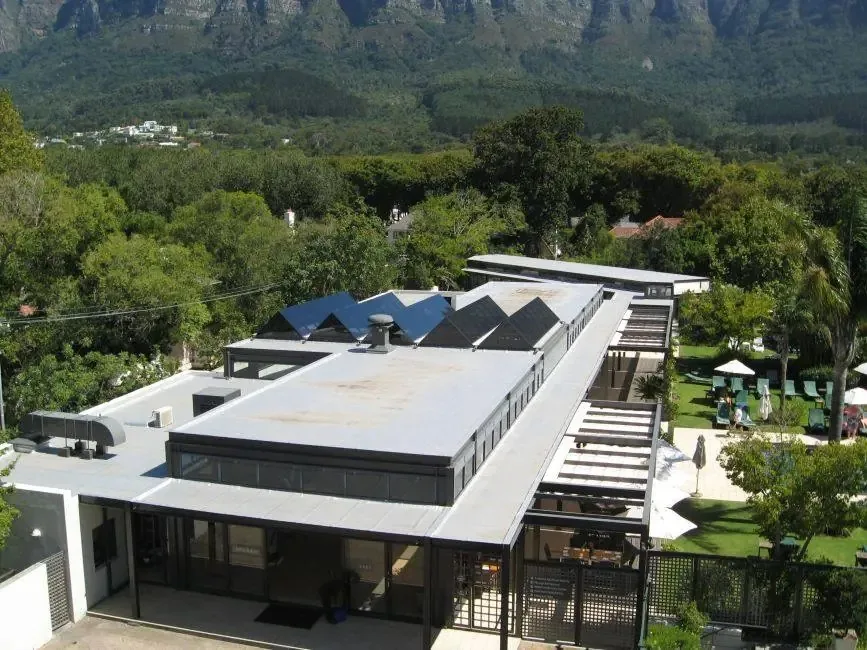
For a Cape Town business, electricity is one of the few costs you can actually take control of. Commercial solar, with or without batteries, lets you produce your own power during the day, keep critical equipment running in an outage and plan your energy costs with more certainty. Here's how a commercial project works, what it involves and what to ask before you commit.
Why Commercial Solar Is Different From Home Solar
A home system is sized around a family's routine. A business is sized around its operation: opening hours, machinery, refrigeration, servers, pumps or a busy kitchen. Most businesses use the bulk of their power during daylight hours, which is exactly when solar produces, so every kilowatt-hour from the roof can offset power you would otherwise buy. That's why there's no off-the-shelf commercial system. Every one we build is custom designed and priced for the site.
Step 1: A Proper Site Assessment
A good design starts with data, not guesswork. We review your electricity bills, your load profile (how much power you use at each time of day) and the roof or ground space available. This tells us how big the solar array should be, whether a battery makes financial sense and which loads must stay on in an outage.
Step 2: Choosing the Right System
We install two premium commercial platforms, and the right one depends on your site:
- Tesla Powerwall 3. Battery and inverter in one, stackable for larger sites, with backup for critical loads and control in the Tesla app. The Powerwall 3 Expansion adds 13.5 kWh per unit, with up to three per Powerwall 3. See our Tesla Powerwall systems.
- Sigenergy SigenStack. A modular three-phase hybrid inverter with SigenStack batteries built from 12 kWh LFP modules, stacking from 48 to 193 kWh and more. It supports backup, peak shaving and time-of-use control, so you can start small and add storage later. See our Sigenergy systems.
On the panel side, larger roofs and commercial sites benefit from high-output bifacial panels, which can collect reflected light from the back as well as the front.
Step 3: Mounting That Suits Your Building
Commercial buildings come in every shape. We mount on angled roofs, corrugated and IBR sheeting and Klip-Lok, and we also build ground-mounted and carport systems where roof space is limited. Every mounting is matched to the roof or site, sealed and watertight, with leaks covered by our warranty.
Step 4: Smart Control for Bigger Sites
On larger installations, how the system is controlled matters as much as its size. We use the MCS G2 controller, which forecasts on-site load and solar production, optimises the system in real time, analyses power quality and sends fast notifications, with local and remote monitoring. It keeps the system working to your operation rather than the other way round.
Step 5: Compliance Done Right
A commercial system has to be approved and signed off before it can legally connect to the grid. Every commercial installation we do includes:
- SSEG (small-scale embedded generation) approval from the council
- A Certificate of Compliance
- Engineer sign-off
- DNP3 remote control, required for systems above 100 kW
Skipping these steps can leave a business with a system it can't legally use, problems with insurance or trouble when selling the property, so always ask an installer exactly what's included.
Step 6: A Fixed Proposal You Can Take to the Board
Once the design is done, you should get a clear, fixed price, not an estimate that grows during installation. Our commercial proposals include the expected Section 12B tax savings and the payback period, so you can weigh the investment properly. Section 12B of the Income Tax Act lets qualifying businesses claim an accelerated capital allowance on renewable energy assets; your accountant or tax practitioner can confirm how it applies to your business. If you'd rather spread the cost, have a look at our solar finance options.
Questions to Ask Any Commercial Installer
- Did you look at our actual load profile, or only our monthly bill?
- Which loads will stay on in an outage, and for how long?
- Is the price fixed, and does it include council approval, the CoC and engineer sign-off?
- What happens if a unit fails? Our premium brands carry a swap-out warranty, so a faulty unit is replaced rather than repaired.
- What public liability insurance do you carry? We carry R20m+.
For more on why businesses are making the move, read why businesses are turning to commercial solar in South Africa.
Book a Site Assessment
MLT Power has been installing since 1986 and holds a 4.9-star Google rating from 143 reviews. We're a Tesla Premium Installer, South Africa's first installer of the full Tesla range, and a Sigenergy Certified Installer, working across Cape Town and Gauteng. Request a site assessment or call 087 943 2299, and we'll design a system and fixed price for your business.
Ready to go solar?
Send us your latest electricity bill and we'll design a system and fixed price for your home or business.